Safe water underpins human health, economic development and climate resilience.
Without it, children cannot thrive, healthcare systems falter, food security weakens, and communities become more vulnerable to disease and displacement. Nowhere is this more urgent than in regions already facing economic pressures, environmental stress, and rapid population growth.
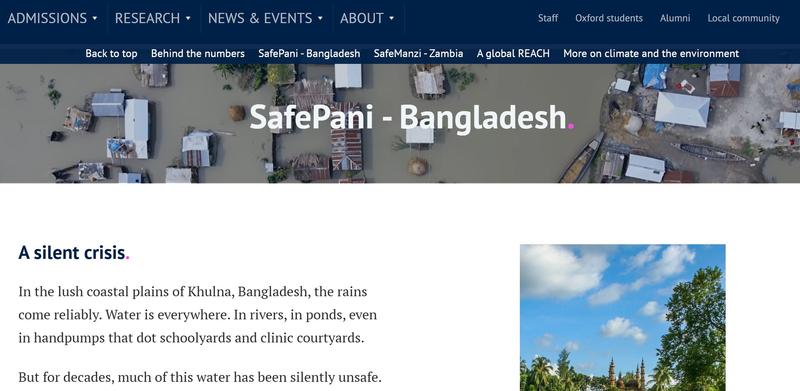
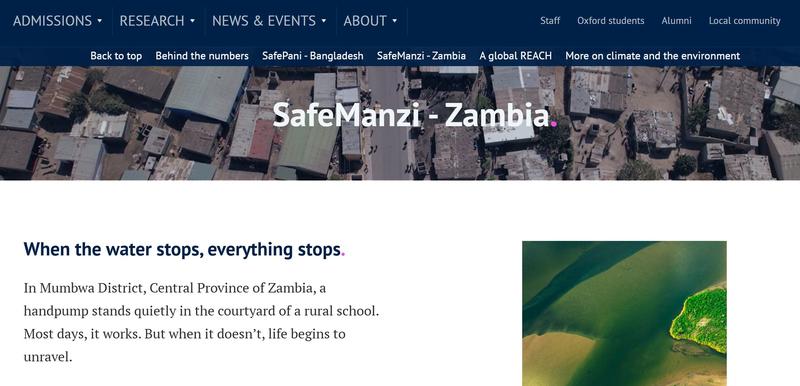
In countries like Bangladesh, millions rely on water often contaminated by bacteria and chemicals. In Zambia, climate-accelerated droughts, ageing infrastructure and growing urban demand means that communities are often contending with erratic water supplies.
Despite its importance, access to safe water remains inequitable. In fact, the human right to water and sanitation was only formally declared in 2010.
Socioeconomic, geographic, political and environmental factors exacerbate the impacts of not having access to safe water supplies. Improving access to water and water security, therefore, is a critical path to sustainable growth and the reduction of poverty.
Working to address this inequity, the REACH programme, led by Professors Katrina Charles and Rob Hope from 2015 to 2025, has improved water security for over 10 million vulnerable people in Africa and Asia. The 100 Million Initiative, building on REACH's success, has an even more ambitious target - to reach 100 million people by 2030.
A new article on the Oxford University website describes how the SafePani and SafeManzi models, based on empirical evidence collected as part of REACH programme research, are helping to provide reliable drinking water in rural schools and healthcare centres in Bangladesh and Zambia.
Read the full article